

Sid Simons for Tibi Close Friends
A 3-part live set, and interview, at 666 Studios.

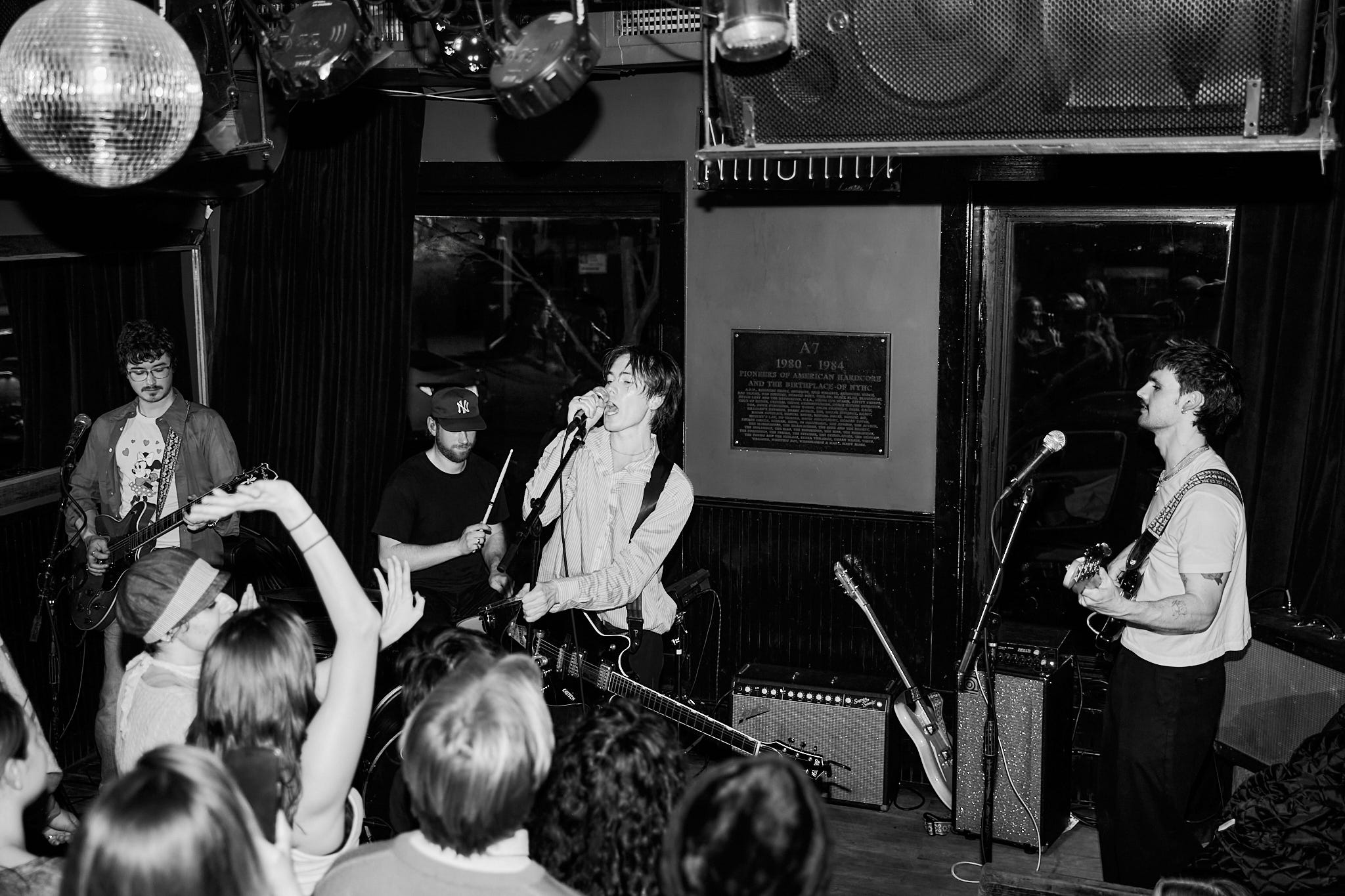
The first time I watched Sid Simons walk on stage, there was a gap in the room. Niagara is one of those small bars in the East Village where the geometry of a Thursday night never quite resolves itself - people standing back, holding drinks, hesitant about the space in front of the stage in the way crowds get when they don’t yet know if the artist is going to ask anything of them. Sid stepped on, and within a minute there was no gap. He filled it the way only a performer who genuinely loves the room can - without asking, without announcing it, just by deciding the energy would be different and then making it so. The space in front of the stage closed up. The room tilted forward. I have been to a lot of small bar shows in this city, and I have not seen many people do that as effortlessly as Sid did that night.
I had found him a few months earlier through a short film priv.y agency made in New York - Noah Berg’s team, whose work I had been paying attention to for a while. There was something about him that caught immediately - the look, the way he carried himself in front of a camera, an ease - and I went home that night and dove into his music. Three hours later I had listened to most of the catalogue, sat with the range of his voice, the specificity of his lyricism, the architecture of his songwriting, and I sent him a message. We are the same age, and there was a strange certainty I had, before we had even spoken, that we would understand each other.
I sent him a quick message about Tibi Close Friends - that I produced this series, that I would love to collaborate if he was open to it. He was. I emailed him and his manager the next day, and we set up a call. From the very first conversation, Sid had a clear sense of what he wanted this to be - which is to say, he wanted it to be his. He did not want a standard live set. He wanted the project to paint a portrait that went beyond the music, to reveal something of who he is as a person and not just as a performer. Which was music to our ears, because Matt and I had been wanting to make a Close Friends project of exactly this kind for some time - something more all-encompassing, more documentarian in spirit, that opened the frame on the artist’s interior life rather than restricting it to the song.
It helps that Sid has had the kind of life that does not condense well into a one-line bio. He was born in Portland, raised in Sydney, went to school in Shanghai, and at some point in there dropped out to get in a van and drive across America. He is based in Brooklyn now. When you ask someone like that where they are from, the answer is a small autobiography. You cannot make a quick-hits live set about that person and feel like you’ve represented him. You need the longer form - the documentary, the conversation, the room to let the answers find their actual shape.
If you have read my piece on Evan Blix, you will recognize a thread here. I wrote in that one about a question I had been carrying for years - whether the soul of the music I grew up on, the music my parents played in the house, Bob Dylan and Neil Young and the Stones and Simon & Garfunkel, would ever come back through someone of my generation. Evan was my first real answer. Sid is my second. They are very different artists, and the comparison is not meant to collapse the difference between them - but they share something, a seriousness about craft that does not feel performative, a willingness to write slowly and produce carefully, an inheritance from another era that is being absorbed rather than imitated. Sid is one of the artists carrying this lineage right now. Listen for ten minutes and you will hear it.
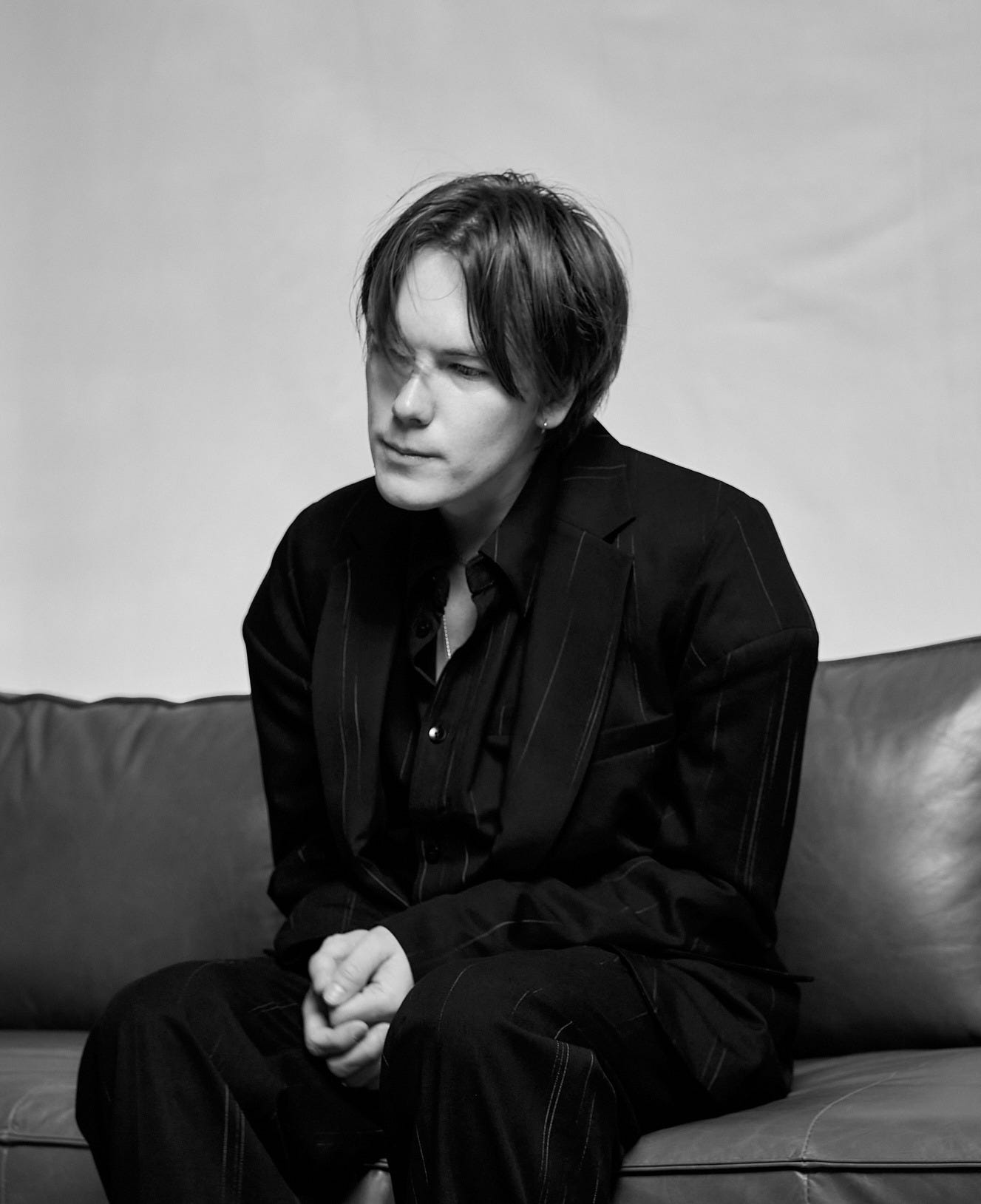
We ended up making two things, intertwined. The first is a documentary interview - staged at 666 Studios, the questions written to get past music and into who Sid is as a person: where he comes from, what shaped him, what he carries, where he is going. He was generous with the answers. The one I keep returning to is the way he talked about songwriting - that a song he writes today might mean one thing to him in the moment, and then six months or three years later, after enough living has accumulated on top of it, the song will quietly turn into something else. The same words, the same chords, but the meaning underneath has reorganized itself. There was something honest about hearing him say that, because it cut against the assumption most people hold about songwriters - that the song is fixed at the moment of composition, that whatever it meant then is what it means now. Sid’s answer was the opposite, and that kind of statement, made by an artist about his own work, is the sort of thing you only earn through years of honest writing. It is the difference between a musician who is still learning his instrument and a musician who has started to learn what the instrument is for.
The most affecting moment in the interview was when he talked about Dirt. The song is about a friend who passed away, and when it first arrived, it was a heavy thing to carry - closer to grief than to anything else. In our conversation, however, he said that it does not feel that way anymore. That, with enough time and enough living, it has turned into something closer to gratitude. A way of keeping someone close, rather than a way of mourning them. There is a kind of seasonal logic to that - winter does not vanish, it thaws - that feels especially right for a project landing in May.
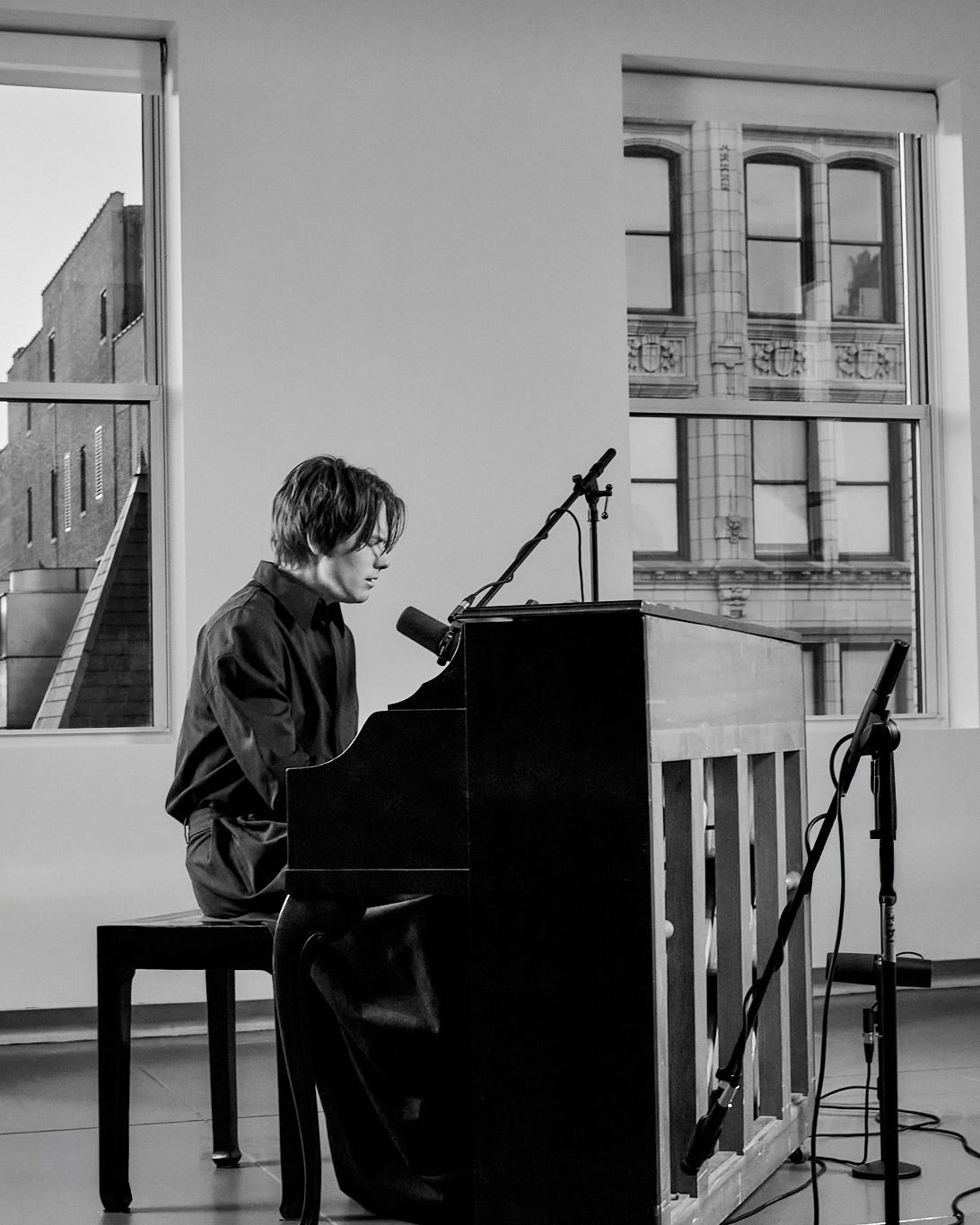
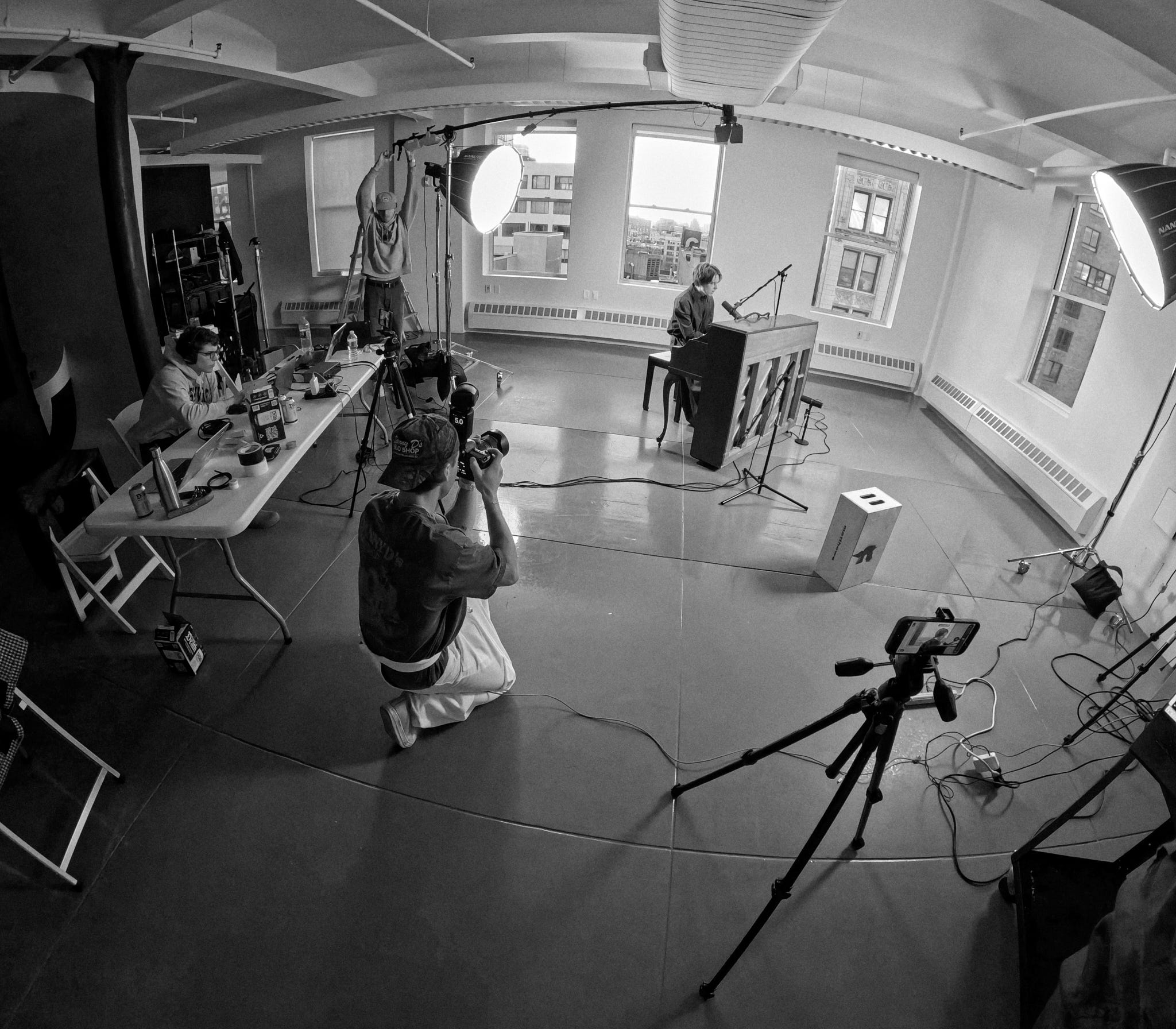
The second part of the project is a stripped-back three-song live set, recorded in a clean, wide, west-facing corner of 666 Studios, on an upright piano we found for free on Craigslist. Picking up a free Craigslist piano in New York City is exactly as ridiculous as it sounds. The 500-lbs piano lived on the sixth floor of a pre-war walkup in Williamsburg. We got it down six narrow, slippery flights of stairs, into a van, over the Williamsburg Bridge, and into NoHo. Six hours, door to door. Our team of hero movers from Lugg (not a sponsor) deserves a shout-out for getting that thing through three doorways without losing a finger or a key. There is a version of Dirt within the live set - voice and that piano, very little else - that I think is one of the best things we have captured in the history of the series. I have heard it more times than I can count at this point, and it has not lost anything. If anything, it has grown.
There is one creative decision that runs across all of it - the documentary, the live set, the photography - that I want to name on its own, because it is the through-line of the project: we shot everything in stark, high-contrast black and white. The choice was not aesthetic for its own sake. It is the same instinct that brought the live set down to voice and piano, now applied to the visual language. The piano without the band. The face without the color. Both decisions are about subtraction - about trusting that what is left, once enough has been taken away, is enough. Black and white refuses to do the emotional work for you. There is no warm orange light to signal intimacy, no cool blue to signal sadness. You have to read the person - the way Sid’s mouth moves on a long note, the way his hands settle on the keys between phrases, the small shifts color tends to bury under its own noise. Our reference deck was built around the photographers and filmmakers who taught us what the absence of color can do. Anton Corbijn, whose portraits of musicians look like the artists are standing inside their own songs, Gordon Parks, who insisted that black and white was not a constraint but a deepening, Ari Marcopoulos for the intimate proximity, and William Claxton for the patience of the frame. And on the moving-image side, D.A. Pennebaker’s Dont Look Back - a film that, more than fifty years later, remains the standard for what a portrait of a musician on the move can be - alongside the cinematic aspiration of films like Moonlight and There Will Be Blood, where the contrast and the composition do as much narrative work as the dialogue.
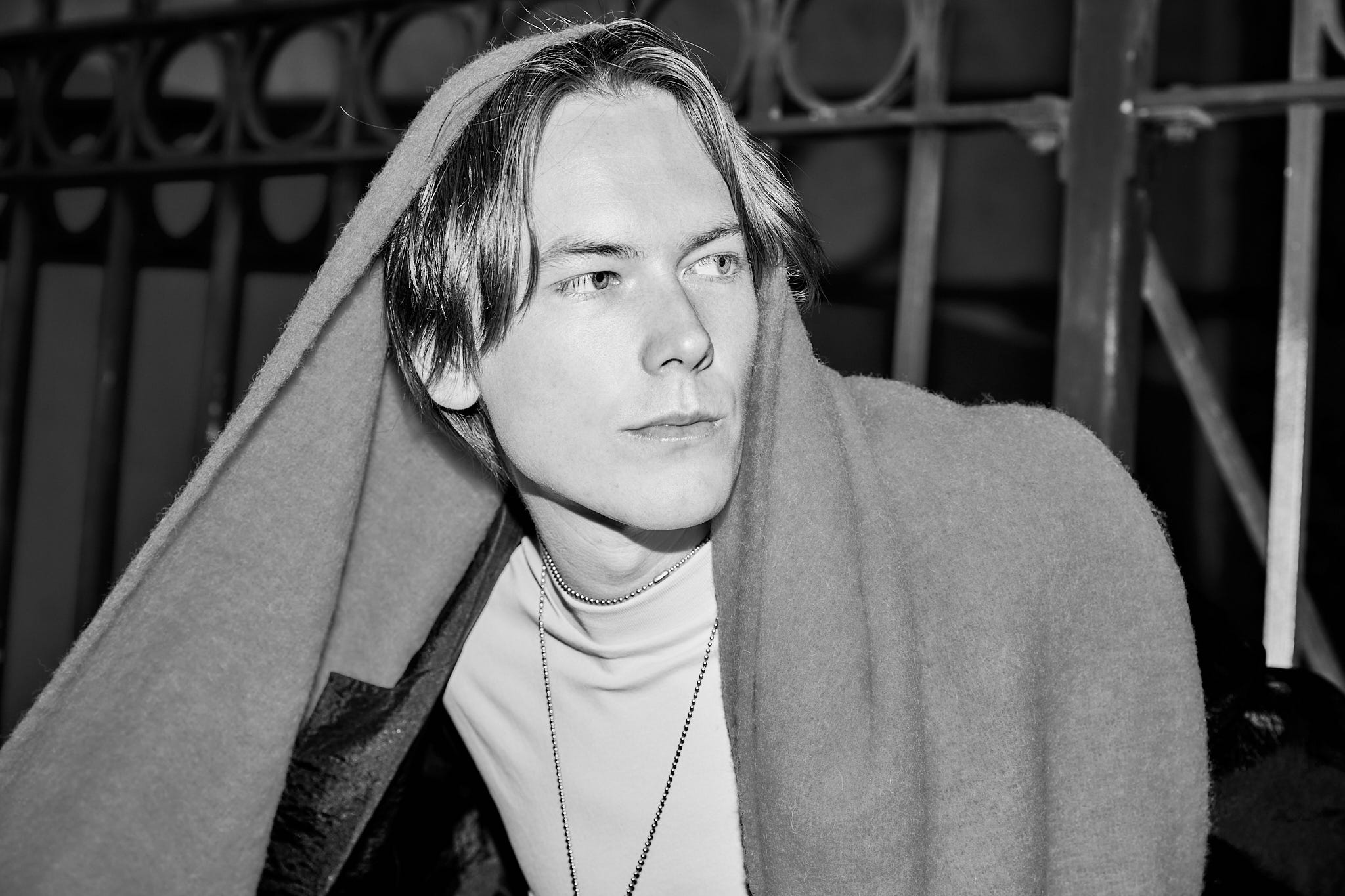
For the photography, I shot Sid across four worlds, all in that same visual language. The first was Niagara - from the night I described at the top of this piece, capturing his on-stage persona, the version of him that takes a room and bends it. The second was on the streets of SoHo, the version of him that lives inside the swirl of New York, styled by Emmalee in pieces from our Spring 2026 collection. The third and fourth were on set at 666 Studios - during the interview and during the performance - the most stripped-back of the four. These were the ones that illuminated Sid being Sid: just sitting with himself, talking honestly, not performing anything other than the bare necessities of the task. The four sets of images are different in tone, but they belong to the same person, and when you see them together they make a fuller picture of him than any one of them would on its own. Format as portrait, in four voices.
A note on the team. Matt and I produced this one almost end-to-end - the set design, the piano logistics, the production, the direction, the photography. Sadie, our production assistant, has been a force on the cutdown and teaser side, the work that does not get billed as the project itself but is, in a real sense, what makes the project travel. Seth, our audio engineer, did an extraordinary job on the song audio for the live set - the mix is clean and patient and sits exactly where it needs to, which is not as easy as it sounds when you are working with voice and piano in a studio that was not built for recording. Emmalee handled styling across all the shoots - crafting a beautiful narrative through the lens of silhouette and fabrication.
This is our ninth Tibi Close Friends, and it is clear by now that a shape has started to emerge through the production of each successive project. Bebe Stockwell taught us what a live set could feel like in our space. Brunello showed us what was possible when we worked with someone who runs his own label and answers to no one. Black Hibiscus (JayJay and Moye) and Leyla extended the format. Evan Blix gave me my first proof that the music I love most was alive in someone my age. And Sid, in turn, gave me the second. He is not at the start of his career. He is not at the peak of it either. He is in what I keep thinking of as the before-they-were-them stretch — the part of an artist’s life where the work is powerful, the craft is sharpening visibly in real time, and the larger thing they will become is still on the other side of a horizon no one can quite see yet. It is, in my opinion, the most interesting time to make something with somebody.
And finally, thank you Sid, for trusting us with this one, for showing up to a free Craigslist piano with the same focus you would have brought to Lincoln Center, and for the way you sang Dirt. The full project is live now at Tibi.com, with extended photography and behind-the-scenes available on the Tibi Creative Lab Instagram and the live set on YouTube. If you have made it this far, I would suggest watching the live set first. And then the interview. In that order.
*Sid plays the Bowery Ballroom on July 11, and we hope to see you there: tickets.*