


For five years between 1975 and 1980, John Lennon mostly did not make music. He baked bread. He read. He stayed home in the Dakota with his son Sean, who had been born in October of ’75 - on Lennon’s own thirty-fifth birthday - and let the press and the industry and the myth of John Lennon carry on without him. By Lennon’s own account, and by those of the people closest to him, it was one of the happiest stretches of his adult life. Beautiful Boy (Darling Boy) is the song he wrote about it - a lullaby for a five-year-old, recorded for Double Fantasy and released in November of 1980, three weeks before Lennon was killed on the sidewalk outside the same building where he had spent those five years. It is the song that opens this month’s curation, and there is a long answer for why, but the short one is that it has been my favorite summer song for as long as I can remember.
Beautiful Boy has carried me through more than a few hard days, the kind where the floor tilts and you reach for the one thing you know will hold. I have never needed to understand why a lullaby written for a five-year-old is that thing. It is nostalgic without belonging to any particular memory. It is a song for a son, and for a father, and for a friend, and for anyone who has ever loved someone enough to be a little afraid of it. It moves the way a wave does in the seconds before it breaks - cautious, gathering, almost reluctant - and then folds over against a cliff-edged shore, all at once and gently at the same time. It is the feeling of salt and sand still in your hair hours after the water. It is the warm smell of wheat in a field and cherry trees in bloom drifting through a window you forgot you left open. It takes your past and your future and sets them down in the same place, and what is left over, the remainder of that equation, is presence. Just presence.

That, I think, is what Lennon found in those five years of bread and books and staying home - not a retreat from his life but the center of it. Every day in every way it’s getting better and better, he sings, and then, life is what happens to you while you’re busy making other plans. He had been the most famous man alive, and he traded the noise of it for an unrepeatable thing happening inside one apartment, between a father and his boy. The records and the press and the legend, it turned out, had only ever been the way of getting to that room. The boy was the part he did not want to miss. And that is the feeling of June to me - not the deep of summer, not the first thought of fall, just the open door of the season.
Switching grooves, there is a short film I have not been able to stop watching - The Shape of Paris, five minutes of the Canadian skateboarder Andy Anderson moving through the city, filmed by Brett Novak. I say skateboarding, but the word undersells what he does. Anderson skates in a style that reaches all the way back to the freestyle era of the sport and then somehow forward at the same time. The effect is less like tricks than like figure skating - if the rink were an entire city and the skater carried it under his feet wherever he went. He floats. He spins through a courtyard, carves a slow line around a fountain, turns a flight of museum steps into something graceful instead of reckless. Paris in the summer has rarely looked the way Novak frames it here. And running underneath all of it is the song I actually came here to tell you about - Gone Down the River, by Fletcher C Johnson - scoring the film so exactly that I had to go hunting for its name the moment it ended, a loose, loping folk thing that sounds like it was caught in a single take on somebody’s back porch, all warmth and no polish. The song is barely a story, more a wandering catalogue of strange and beautiful things a drifter has seen crossing the country coast to coast, none of it resolving, none of it building toward a chorus that would tidy it up and explain it.
The other track to slow down for is Mo Se B’ólá tán, by Dele Sosimi with The Estuary 21 and the British artist who records under the name Get Cape. Wear Cape. Fly. Sosimi is one of the great living Afrobeat musicians - he was the rhythm keyboardist in Fela Kuti’s Egypt 80 from 1979 to 1986, then co-founded Positive Force with Femi Kuti and was the band’s musical director until 1994. The pedigree matters because Afrobeat is one of those forms where lineage is not a credit on a sleeve, it is an inheritance - knowledge passed from one player to another in the room, on the bandstand, in person. Mo Se B’ólá tán moves the way Sosimi moves - patiently, in layers, with the conviction that the groove is not building toward anything. The groove is the point.
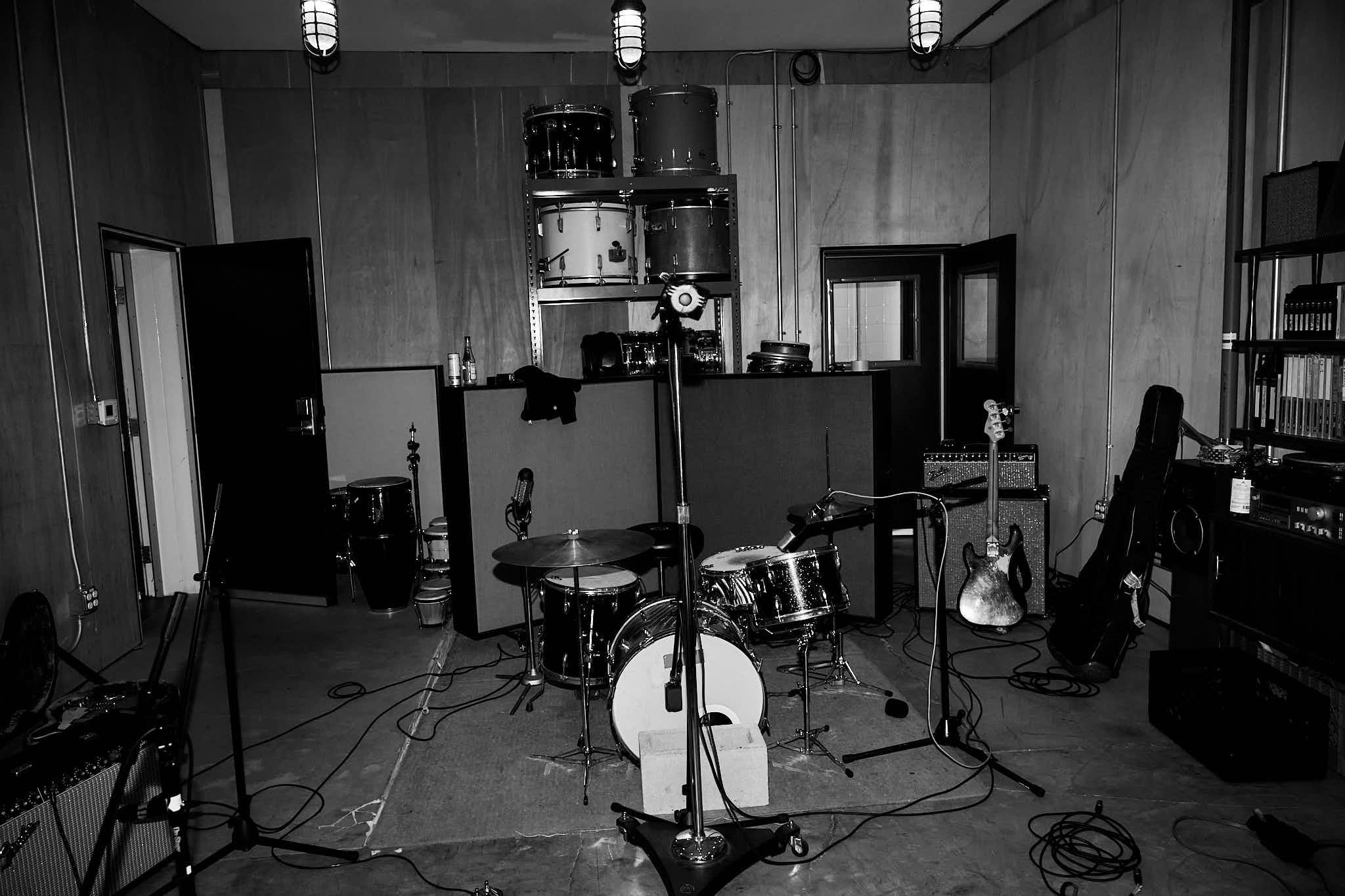
On our way out, two more worthy of honorable mention: Stay a While, the Sister Sledge edit by The Revenge, sits second on the playlist on purpose - it is the song that opens the door right after Beautiful Boy closes it, gently, behind you. And Touch, by Levitation Room, a psychedelic rock band out of Los Angeles and the next Tibi Close Friends project. I will save the proper introduction for when that piece arrives but take this as the first warm signal of what is coming. There is energy on this curation, plenty, but the note underneath everything is weightlessness, the feeling of having shed something. A coat. A heaviness you forgot you were carrying. The brace you keep in your shoulders all winter long. July and August are still out there, hotter and slower - but that is later. June is the door. Stand in it.
p.s. tracks sixteen, seventeen, and eighteen - Secret Life, The Lie, and Dirt - Sid Simons, recorded live at 666 Studios and out now on every platform, the first time Tibi Close Friends has lived on the DSPs.